Why Sports Investments Are Focused on Long-Term Results
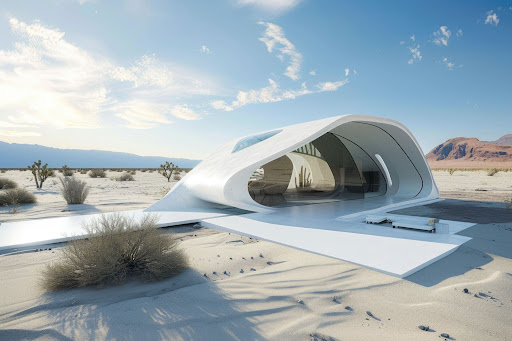
Smart stadiums are evolving into “smart venues” that will be transforming how the sports business operates. The buildings themselves will become more flexible and connected, providing access to all the data associated with the venue. A number of smart venues around the world (such as those found in the Middle East) are serving as models of international standards for future generations of smart venues in both Europe and North America. With continued advances in technology, we can also expect the physical experience of attending a game and the digital experience of viewing a game to increasingly blur together, thereby positioning the stadium once again at the center of global sports fandom.

The Role of Digital Infrastructure in Asset Valuation
The contemporary sport business is working towards creating self-sustaining revenue channels with an emphasis on broadening technology in order to increase sustainability. Technology has become the core component for large organizations in terms of building long-term value. The strategy of using data is typically achieved by implementing a Melbet app in an organization’s market. This allows the organization to have a streamlined connection to consumers and to collect analytics about how users interact with the application. Organizations can maintain an active relationship with consumers regardless of performance. These relationships enable organizations to create additional income based on engaging their customers through content and targeted advertising.
The second screen experience is a KPI for all commercial partners through digital integration. A second screen is another way that fans view content and interact with their clubs. Because the usage can be tracked, clubs will be able to improve their sponsorship deals and global outreach programs. Having a strong digital presence is important for international football clubs so they remain relevant during the off-season or when major tournaments are not taking place. It is about creating a digital ecosystem where your fans have constant touch points across the globe to increase the lifetime value of each fan.
The valuation of digital assets within sports organizations is now driven by several technical and commercial parameters:
- Active user acquisition costs compared to long-term retention rates.
- The scalability of server architecture to handle peak traffic during a major derby.
- The depth of first-party data collection for hyper-targeted sponsorship activation.
- Integration capabilities with emerging technologies like augmented reality and blockchain.
Infrastructure and the Legacy of Major Events in Qatar
The 2022 FIFA World Cup in Qatar is used here as a key example of long-term capital expenditure on an asset (infrastructure). The construction of the Lusail Stadium and the Al Bayt Stadium was not done solely with the intent of hosting one World Cup event. They were built to be able to serve as a catalyst for long-term urban growth based on the Qatar national vision 2030. These two stadiums will have high-level event usage over many years, such as high-stakes local derbies or continental qualification games.
The financial commitment to these projects reflects a fundamental belief that high-quality physical assets provide a structural hedge against the economic cycles of the sports market. To access the various interactive and service-based layers of these modern sports hubs, a secure Melbet login allows users to interface with localized digital amenities. This synergy between physical architecture and digital access points creates a seamless environment for the modern spectator.
The comparative growth metrics and payback periods for various categories of sports-related investments
| Investment Category | Primary Objective | Average Payback Period | Risk Profile |
| Youth Academies | Reduction in transfer expenditure | 7–12 years | Moderate |
| Stadium Construction | Matchday and hospitality revenue | 15–25 years | Low (Asset-backed) |
| Digital Platforms | Data acquisition and global reach | 3–5 years | Moderate |
| Media Rights | Guaranteed annual cash flow | 3–10 years | Very Low |
Strategic Talent Development and Youth Pipelines
A key element of an effective long-term investment plan is establishing strong youth development structures. Clubs and national associations that invest in their own academies (such as the Aspire Academy in Qatar) are able to develop and nurture homegrown talent, rather than having to rely on expensive external purchases. The ability of these types of models to create a sizable competitive advantage when assessing prognostics for future financial performance should be obvious.
The results of this strategy are visible in the emergence of national teams with large investments into coach education and sports science. There are several reasons why talent pipelines for these national teams tend to be stable; one of those reasons is that they have developed professional coaching curricula based upon a standard set of tactics and methodologies used by elite coaches. Another reason is the use of strategic venture capital funding by clubs to expand their training facilities and data analysis departments. By developing internally, clubs protect themselves from the increasing costs associated with the inflation of the player-transfer market.
Revenue Diversification and Commercial Sustainability
The move from being a purely sports-based business to one that has an extensive portfolio of commercially viable opportunities will require a well-thought-out strategy for generating multiple revenue sources. For example, while tickets and broadcasting rights were the traditional revenue generators for most sports entities, they have now turned their attention towards what is referred to as “ancillary revenue.” In order to create a financially sustainable model that produces year-round income, many sports-based businesses are turning their sports assets into multipurpose facilities that can be used throughout the calendar year.
Key components of this diversification include:
- Mixed-Use Real Estate Development: Integrating commercial offices, retail spaces, and hotels within the stadium precinct to decouple income from the sporting calendar.
- Strategic Sponsorship Alignment: Moving away from simple logo placement toward deep-tier partnerships that leverage the digital infrastructure mentioned earlier, allowing brands to interact with fans through data-driven activations.
- Monetizing Technical Expertise: Elite academies and high-performance centers (like Aspire) often generate revenue by hosting international teams for training camps and selling proprietary sports-science methodologies.
This diversification acts as a financial buffer. While performance on the pitch may be cyclical, a robust commercial structure built on diversified assets ensures that the organization remains attractive to institutional investors, maintaining its valuation even during “rebuilding” seasons.
Synthesis of Sustained Capital Growth Models
The trend toward extended time frames for investing in professional sport is a reflection of an increase in size and scope within the business. The emphasis of all clubs has shifted from focusing solely on short-term achievement regarding stadium, communication technologies, and player acquisition, to establishing a firm base for sustainable fiscal health over time. By adopting a longer time frame in which to achieve financial stability, the ability for professional sport to continue attracting institutional money into the sector will increase; this will help establish a sense of security previously absent from the sports industry. As both technological advancements and physical assets are now becoming interconnected and interdependent, the differences between what constitutes a sports franchise versus a diversified commercial entity will decrease.
The use of institutionalized methods to manage the risk inherent in owning/operating the sports asset portfolio has significantly changed how risk management functions in this industry. By combining modern technology with stadiums that serve as hubs for developing young people to continually produce new talent through youth development programs, sports organizations are able to mitigate or completely eliminate the financial risks of uncertainty associated with achieving on-pitch success.
In creating stable financial returns (as instruments), sports organizations can attract significant levels of institutional investment while providing investors with clearly defined and understood ROI data as well as additional diversification of revenue streams. Furthermore, integrating physical infrastructure with sophisticated digital mechanisms for collecting and analyzing data creates a sustainable and stable platform upon which an organization may grow.